

Every daily Panchang lists three short periods besides Rahu Kaal: Gulika Kaal, Yamaganda and Abhijit Muhurat. The first two are, like Rahu Kaal, times to avoid for new beginnings; Abhijit is the opposite, a midday window considered strong for success. South Indian Panchangs give them special weight. For Rahu Kaal itself, see What is Rahu Kaal?
How these periods are calculated
The time from local sunrise to local sunset is divided into eight equal parts. Rahu Kaal, Yamaganda and Gulika Kaal each occupy one fixed part on each weekday. On a day with sunrise at 6:00 AM and sunset at 6:00 PM, each part is exactly 90 minutes; on real days the parts are longer in summer and shorter in winter.
Weekday table (for sunrise 6 AM, sunset 6 PM)
| Day | Rahu Kaal | Yamaganda | Gulika Kaal |
|---|---|---|---|
| Sunday | 4:30 to 6:00 PM | 12:00 to 1:30 PM | 3:00 to 4:30 PM |
| Monday | 7:30 to 9:00 AM | 10:30 AM to 12:00 PM | 1:30 to 3:00 PM |
| Tuesday | 3:00 to 4:30 PM | 9:00 to 10:30 AM | 12:00 to 1:30 PM |
| Wednesday | 12:00 to 1:30 PM | 7:30 to 9:00 AM | 10:30 AM to 12:00 PM |
| Thursday | 1:30 to 3:00 PM | 6:00 to 7:30 AM | 9:00 to 10:30 AM |
| Friday | 10:30 AM to 12:00 PM | 3:00 to 4:30 PM | 7:30 to 9:00 AM |
| Saturday | 9:00 to 10:30 AM | 1:30 to 3:00 PM | 6:00 to 7:30 AM |
Gulika Kaal
Gulika (also Mandi) is described as the son of Saturn. Tradition holds that whatever is done in Gulika Kaal tends to repeat. So it is avoided for things you would not want repeated, such as funeral rites, illness treatment that begins a long course or taking a loan, while some people deliberately use it for things they would like to recur, such as buying gold or depositing savings.
Yamaganda
Yamaganda (also Yamagandam) takes its name from Yama, the god of death. It is treated like Rahu Kaal: avoid starting journeys, new ventures and ceremonies in it. Ongoing work can continue.
Abhijit Muhurat
- The daytime is divided into 15 muhurtas. The eighth, around local noon, is Abhijit Muhurat.
- It lasts about 48 minutes, roughly 24 minutes before and after local midday (the midpoint of sunrise and sunset), not 12:00 by the clock.
- It is believed to remove many defects of the day, so it is used for urgent auspicious work when no full muhurat is available.
- Many Panchangs advise avoiding Abhijit Muhurat on Wednesdays, and it is not used for marriage in place of a proper Vivah muhurat.
Putting it together
- Note today's Rahu Kaal, Yamaganda and Gulika Kaal for your city.
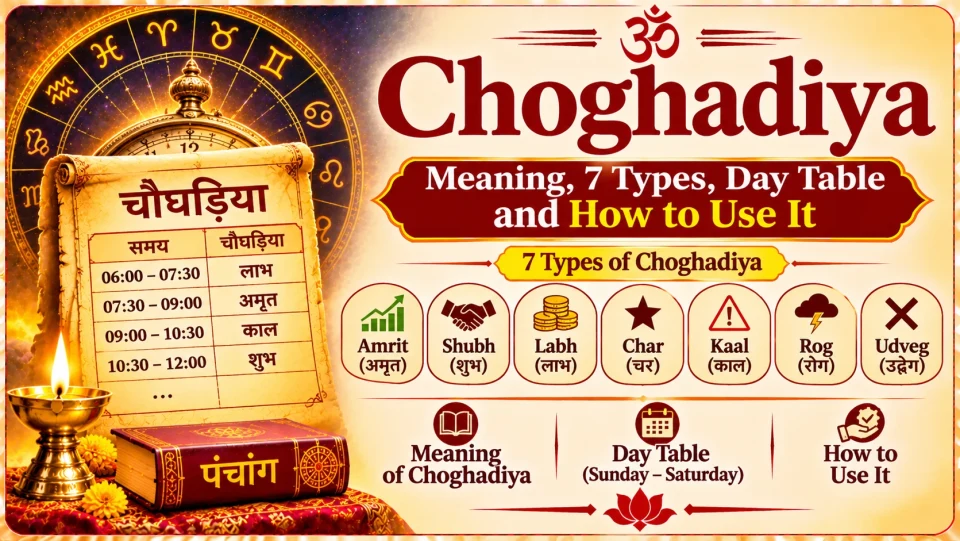
- Pick a good Choghadiya outside those periods; see Choghadiya.
- For urgent work, Abhijit Muhurat is a good fallback if it is clear of the three periods.
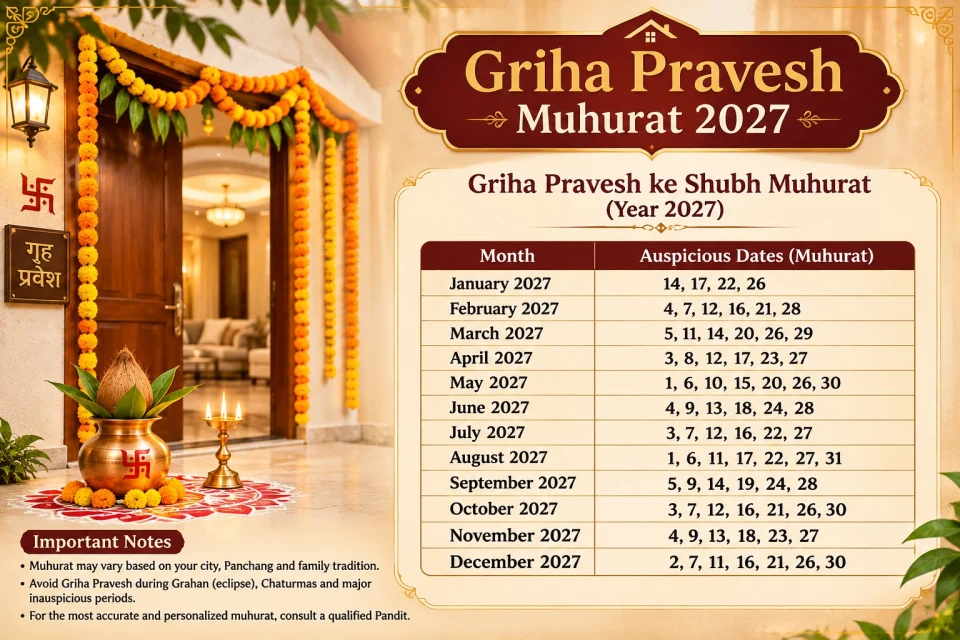
- For marriage or griha pravesh, use a full muhurat; see Vivah Muhurat 2027 and Griha Pravesh Muhurat 2027.
Conclusion
Gulika Kaal and Yamaganda join Rahu Kaal as the daily periods to avoid for new beginnings, while Abhijit Muhurat offers a strong midday window. All of them depend on local sunrise and sunset, so check your city's timings in the Panchang calendar.
Frequently asked questions
What is Gulika Kaal?
One of the eight parts of the day, fixed by weekday and ruled by Gulika, the son of Saturn. Actions started in it are believed to repeat.
What is Yamaganda?
A daily period, about one-eighth of the daytime, treated like Rahu Kaal and avoided for starting new work or journeys.
What time is Abhijit Muhurat?
About 24 minutes either side of local midday, the midpoint between sunrise and sunset. It is roughly 48 minutes long.
Is Abhijit Muhurat good on Wednesday?
Many Panchangs advise avoiding it on Wednesdays, and Rahu Kaal often overlaps midday that day.
Sources and references
Dates and timings were checked against these references on the date shown above. Timings depend on your city: confirm them in a Panchang for your location.
Astrology is a traditional system of interpretation, not a science. Articles are for reflection and guidance, are not guaranteed, and are not a substitute for medical, legal, financial or psychological advice. Read our astrology disclaimer.