

The tithi is the first and most used limb of the Panchang. Festivals, fasts, shraddha and most muhurats are fixed by tithi rather than by the solar date, which is why Diwali or Raksha Bandhan move around the Gregorian calendar each year. This guide explains how a tithi is calculated, lists all thirty, and covers the rules that confuse people most. For the five limbs of the Panchang, see What is Panchang?
How a tithi is calculated
- A tithi is the time the Moon takes to move 12 degrees ahead of the Sun.
- A full cycle of 360 degrees gives 30 tithis in a lunar month: 15 in Shukla Paksha (waxing) and 15 in Krishna Paksha (waning).
- Because the Moon's speed varies, a tithi can last from about 19 to 26 hours, and it can begin at any time of day.
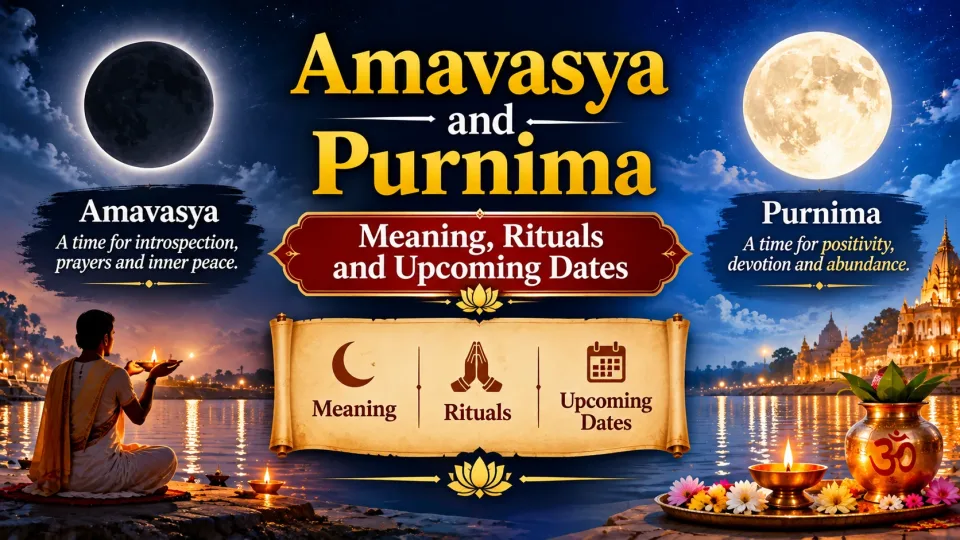
- Amavasya is the tithi in which the Sun and Moon meet; Purnima is when they are 180 degrees apart. See Amavasya and Purnima.
The 30 tithis and festivals linked with them
| No. | Tithi | Examples of festivals and observances |
|---|---|---|
| 1 | Pratipada | Start of Chaitra and Shardiya Navratri, Gudi Padwa, Govardhan Puja |
| 2 | Dwitiya | Bhai Dooj, Jagannath Rath Yatra |
| 3 | Tritiya | Akshaya Tritiya, Hariyali Teej |
| 4 | Chaturthi | Ganesh Chaturthi, Sankashti Chaturthi, Karwa Chauth |
| 5 | Panchami | Vasant Panchami, Nag Panchami, Vivah Panchami |
| 6 | Shashthi | Chhath Puja, Skanda Shashthi |
| 7 | Saptami | Ratha Saptami |
| 8 | Ashtami | Janmashtami, Durga Ashtami, Kaal Bhairav Jayanti |
| 9 | Navami | Ram Navami, Maha Navami |
| 10 | Dashami | Dussehra (Vijayadashami) |
| 11 | Ekadashi | Ekadashi fasts, Dev Uthani Ekadashi, Gita Jayanti |
| 12 | Dwadashi | Ekadashi parana, Vasu Baras |
| 13 | Trayodashi | Pradosh Vrat, Dhanteras |
| 14 | Chaturdashi | Maha Shivaratri, Narak Chaturdashi, Anant Chaturdashi |
| 15 | Purnima (Shukla) / Amavasya (Krishna) | Guru Purnima, Sharad Purnima, Diwali (Amavasya), Mauni Amavasya |
The five groups of tithis
| Group | Tithis | Nature |
|---|---|---|
| Nanda | Pratipada, Shashthi, Ekadashi (1, 6, 11) | Joyful; good for celebrations |
| Bhadra | Dwitiya, Saptami, Dwadashi (2, 7, 12) | Auspicious; good for steady work |
| Jaya | Tritiya, Ashtami, Trayodashi (3, 8, 13) | Victory; good for competitive work |
| Rikta | Chaturthi, Navami, Chaturdashi (4, 9, 14) | Empty; avoided for auspicious beginnings |
| Purna | Panchami, Dashami, Purnima (5, 10, 15) | Full; good for completing and auspicious work |
Udaya tithi, Kshaya tithi and Vriddhi tithi
- Udaya tithi: for most daily purposes, the tithi running at sunrise is the tithi of the whole day. Fasts usually follow this rule.
- Some festivals follow a different time instead, such as midnight for Janmashtami, Pradosh for Diwali Lakshmi Puja and moonrise for Karwa Chauth.
- Kshaya tithi: a short tithi that begins after one sunrise and ends before the next, so it is never the sunrise tithi. It is considered inauspicious for new work.
- Vriddhi tithi: a long tithi that spans two sunrises, so two calendar days share the same tithi.
Your birth tithi
The tithi at your birth is part of your Kundli and is used by many families to celebrate birthdays by the Hindu calendar. You can see it in your free Kundli.
Conclusion
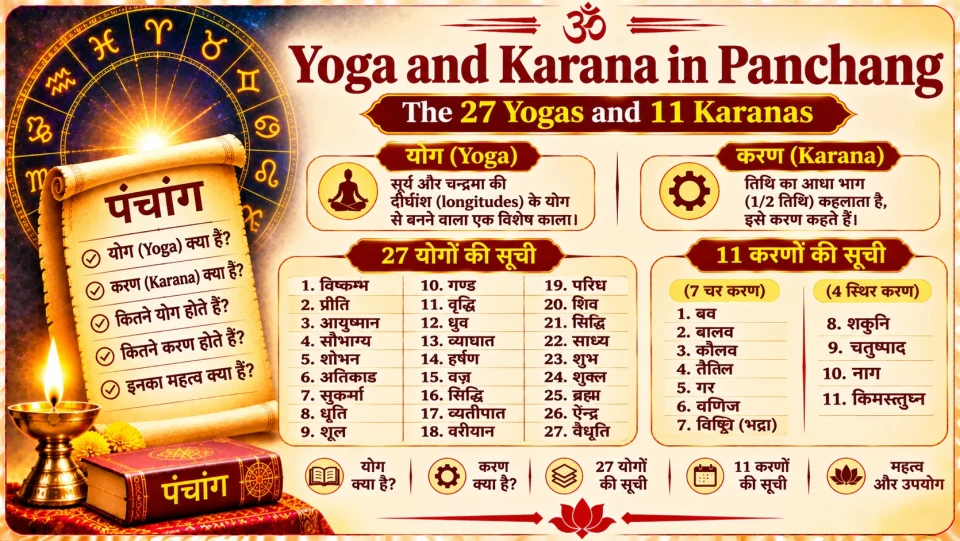
A tithi is a 12-degree step of the Moon away from the Sun, and thirty of them make a lunar month. Know your groups, avoid Rikta and Kshaya tithis for big beginnings, and remember the udaya tithi rule. Check today's tithi in the Panchang calendar, and read about the other limbs in Yoga and Karana.
Frequently asked questions
What is a tithi?
A lunar day: the time the Moon takes to gain 12 degrees on the Sun. There are 30 tithis in a lunar month.
Which tithis are inauspicious?
The Rikta tithis, Chaturthi, Navami and Chaturdashi, are avoided for auspicious beginnings, as are Kshaya tithis. Amavasya is also avoided for most celebrations.
What is udaya tithi?
The tithi running at sunrise. For most fasts and daily purposes, it is treated as the tithi for the whole day.
Why can two days have the same tithi?
When a tithi is long enough to cover two sunrises (a vriddhi tithi), both days share it.
Sources and references
Dates and timings were checked against these references on the date shown above. Timings depend on your city: confirm them in a Panchang for your location.
Astrology is a traditional system of interpretation, not a science. Articles are for reflection and guidance, are not guaranteed, and are not a substitute for medical, legal, financial or psychological advice. Read our astrology disclaimer.