

An eclipse (grahan) happens when the Sun, Moon and Earth line up near the lunar nodes, Rahu and Ketu. In Vedic tradition eclipses are a time for japa, charity and restraint, and the sutak period is observed only where the eclipse can be seen. 2027 has four eclipses, including the long total solar eclipse of 2 August. Here is what each one means for India.
All eclipses of 2027
| Date | Eclipse | Visible from India? | Sutak |
|---|---|---|---|
| Saturday, 6 February 2027 | Annular solar eclipse (Surya Grahan), on Mauni Amavasya | No: Drik Panchang says it is not visible in New Delhi | Not applicable |
| Sunday, 21 February 2027 | Penumbral lunar eclipse (Chandra Grahan) | Not visible to the naked eye | Not applicable |
| Monday, 2 August 2027 | Total solar eclipse (Surya Grahan), on Hariyali Amavasya | Only as a partial eclipse in parts of India, per published reports; totality is outside India | Check your city's Panchang |
| Tuesday, 17 August 2027 | Penumbral lunar eclipse, on Raksha Bandhan | Penumbral: generally not visible to the naked eye | Generally not observed |
The eclipses one by one
6 February 2027: annular solar eclipse
This 'ring of fire' eclipse falls on Magha Amavasya, also Mauni Amavasya, with the Sun and Moon in Capricorn near Rahu. Drik Panchang states it will not be visible from New Delhi, so no sutak applies in India and the day's snan and daan go ahead as usual.
21 February 2027: penumbral lunar eclipse
The Moon passes only through Earth's faint outer shadow in the early hours after Magha Purnima (20 February). For New Delhi, Drik Panchang gives penumbral contact from 2:43 AM to 6:42 AM and notes that penumbral eclipses are not visible to the naked eye, so no Chandra Grahan rituals are observed.
2 August 2027: total solar eclipse
The headline eclipse of 2027, with one of the longest totalities of the century over Spain, North Africa and the Middle East. The Sun and Moon are in Cancer, close to Ketu, on Hariyali Amavasya during Sawan. India lies outside the path of totality, but published reports indicate a partial eclipse will be visible from many parts of the country in the afternoon, so families who follow sutak should check local timings.
17 August 2027: penumbral lunar eclipse
This one coincides with Shravana Purnima and Raksha Bandhan. Panchangs generally do not observe sutak for penumbral eclipses, so rakhi can be tied as usual, after Bhadra.
Eclipses in your horoscope
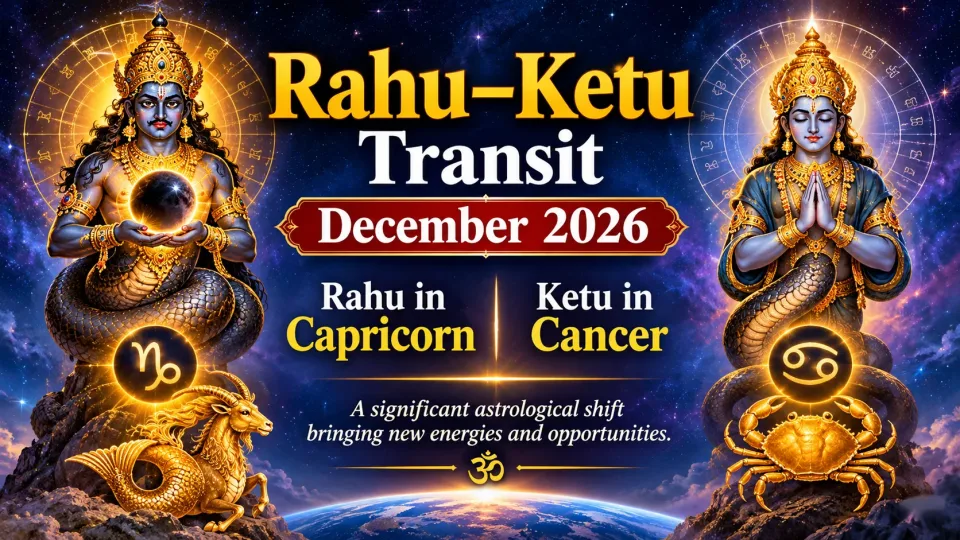
- Eclipses near Rahu and Ketu highlight the houses those nodes occupy. In 2027 that is the Capricorn–Cancer axis, so Moon signs with planets or the Moon itself in Capricorn or Cancer may notice the themes more.
- Astrologers traditionally advise against starting major ventures during the eclipse itself and in the few days around a visible eclipse.
- The effect depends on your own chart: an eclipse falling on your Moon, Lagna or a key planet matters more than the eclipse sign alone. Check your Kundli.
- Eclipse effects are not a cause for fear. The tradition treats the time as especially powerful for prayer and mantra.
What to do during a visible eclipse
- During sutak and the eclipse, many avoid cooking and eating; children, the elderly, the sick and pregnant women are traditionally exempted.
- Chant your ishta mantra, the Gayatri mantra or Maha Mrityunjaya mantra; japa during an eclipse is believed to multiply its merit.
- Put tulsi leaves in stored food and water if that is your family custom.
- After the eclipse ends, bathe, clean the puja space, and give daan of grain, clothes or food.
Conclusion
Of 2027's four eclipses, only the total solar eclipse of 2 August is expected to be seen from India, and only as a partial eclipse. Check your city's timings before observing sutak, protect your eyes, and use the time for quiet practice. For the year's other big movements, read Horoscope 2027.
Frequently asked questions
How many eclipses are there in 2027?
Four: an annular solar eclipse on 6 February, a penumbral lunar eclipse on 21 February, a total solar eclipse on 2 August and a penumbral lunar eclipse on 17 August 2027.
Which 2027 eclipse is visible in India?
Only the solar eclipse of 2 August 2027, and only as a partial eclipse in parts of India according to published reports. The February solar eclipse is not visible, and the two lunar eclipses are penumbral.
Is there sutak on Raksha Bandhan 2027?
The lunar eclipse on 17 August 2027 is penumbral. Panchangs generally do not observe sutak for penumbral eclipses, but follow your family's custom.
Is it safe to watch the 2 August 2027 solar eclipse?
Only with certified solar eclipse glasses or an indirect method such as a pinhole projector. Ordinary sunglasses do not protect your eyes.
Sources and references
- Drik Panchang: Solar eclipse of 2027 (New Delhi) — 6 February 2027: eclipse would not be visible in New Delhi; sutak not applicable
- Drik Panchang: Lunar eclipse of 2027 (New Delhi) — 21 February 2027: penumbral, not visible to the naked eye; 2:43 AM to 6:42 AM
- Drik Panchang: Hindu festivals in August 2027 — Surya Grahan (Purna) on 2 August; Chandra Grahan (Upachchaya) on 17 August 2027
Dates and timings were checked against these references on the date shown above. Timings depend on your city: confirm them in a Panchang for your location.
Astrology is a traditional system of interpretation, not a science. Articles are for reflection and guidance, are not guaranteed, and are not a substitute for medical, legal, financial or psychological advice. Read our astrology disclaimer.