

Gandmool (Gand Mool) Dosh is a tradition about birth nakshatras rather than planetary combinations. If a child is born when the Moon is in one of six particular nakshatras, families often perform a Gandmool Shanti puja. Understanding why these nakshatras are singled out helps parents approach the custom calmly.
The six Gandmool nakshatras
| Nakshatra | Sign | Junction |
|---|---|---|
| Ashlesha | End of Cancer (water) | Cancer → Leo |
| Magha | Start of Leo (fire) | Cancer → Leo |
| Jyeshtha | End of Scorpio (water) | Scorpio → Sagittarius |
| Moola | Start of Sagittarius (fire) | Scorpio → Sagittarius |
| Revati | End of Pisces (water) | Pisces → Aries |
| Ashwini | Start of Aries (fire) | Pisces → Aries |
Why these nakshatras are sensitive
- Each pair sits where a water sign ends and a fire sign begins, and where a nakshatra cycle ends and a new one starts. These junction points are called gandanta, 'knots'.
- Ashlesha, Jyeshtha and Revati are ruled by Mercury; Magha, Moola and Ashwini by Ketu, so the dosha marks the turn from Mercury's to Ketu's nakshatras.
- Traditional texts treat births close to the junction as needing protection, and many astrologers consider only the padas (quarters) nearest the junction as truly significant.
- Learn more about the 27 nakshatras in what nakshatras are.
Gandmool Shanti puja: when and how
- Timing: traditionally on the 27th day after birth, when the Moon returns to the same nakshatra. If that is missed, it can be done when the Moon is in the nakshatra in a later month, or on the first birthday.
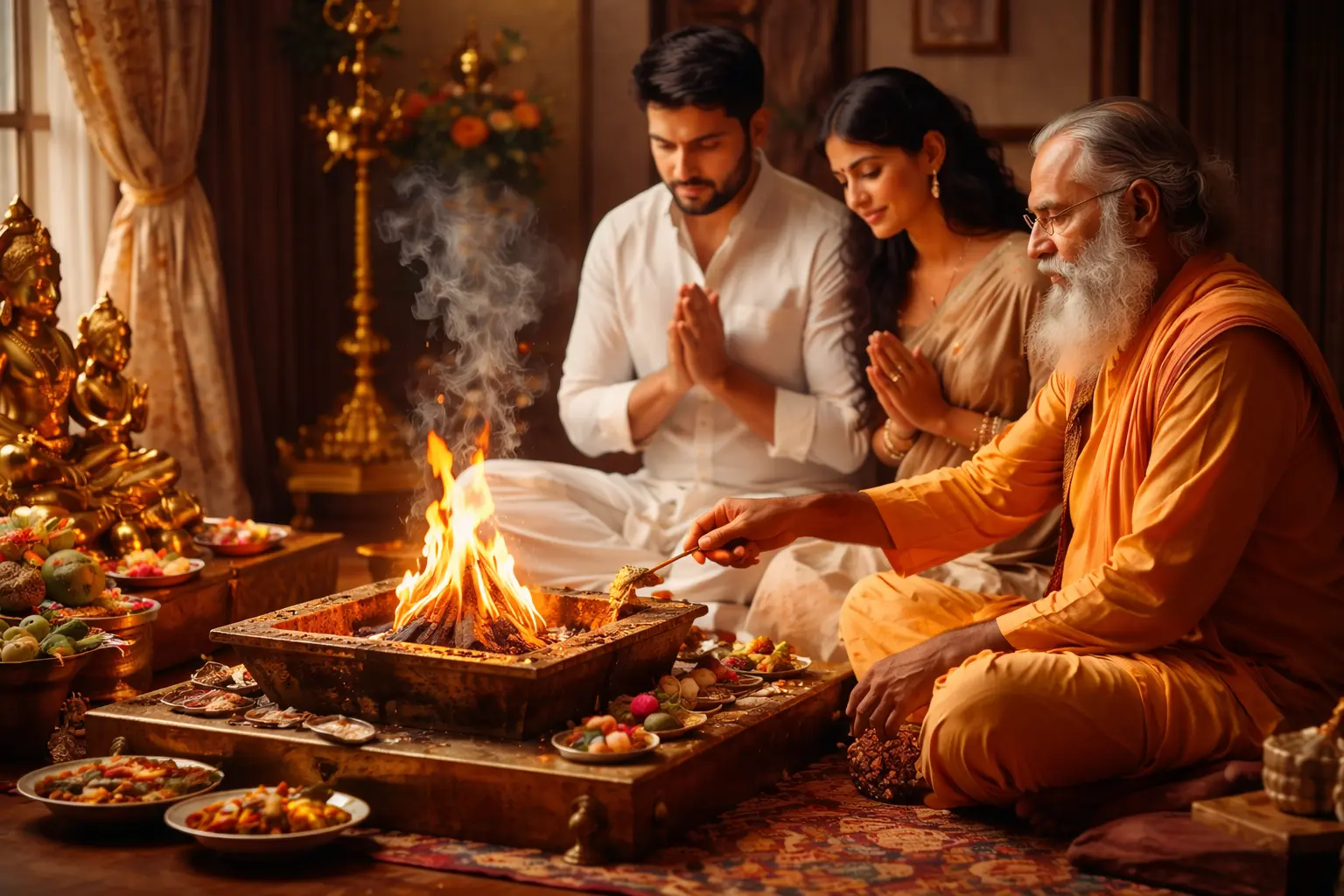
- The puja usually includes Ganesh puja, worship of the nakshatra deity, chanting of the nakshatra mantra 108 times or more, a havan, and bathing the child (or the parents) with water from 27 sources or 27 types of leaves, as per family custom.
- For Moola, Ashwini and Magha, Ketu's nakshatras, Ganesha worship is emphasised; for Ashlesha, Jyeshtha and Revati, Mercury's, Vishnu worship and green items are common.
- Daan of grain, clothes and food to the needy completes the ceremony.
- Ask a family priest to set the exact Muhurat from the Panchang.
Conclusion
Gandmool Dosh marks a birth at a junction of the zodiac, and the tradition answers it with a simple shanti puja around the 27th day. Approach it as a blessing for the child, not a source of fear. You can find the birth nakshatra in a free Kundli, and explore other doshas in our Dosh Pooja guide.
Frequently asked questions
Which are the Gandmool nakshatras?
Ashwini, Ashlesha, Magha, Jyeshtha, Moola and Revati, the six nakshatras at the junctions of water and fire signs.
When should Gandmool Shanti be done?
Traditionally on the 27th day after birth, when the Moon returns to the birth nakshatra. If missed, it can be done in a later month when the Moon is in that nakshatra.
Is Gandmool Dosh harmful to parents?
Folk beliefs suggest so, but they are not rules of astrology. Many children are born in these nakshatras, and the shanti puja is a protective blessing, not a sign of misfortune.
Do all padas of a Gandmool nakshatra count?
Many astrologers consider only the padas closest to the sign junction as significant, so the exact birth time matters.
Astrology is a traditional system of interpretation, not a science. Articles are for reflection and guidance, are not guaranteed, and are not a substitute for medical, legal, financial or psychological advice. Read our astrology disclaimer.